Every grower knows the gap between harvest and the next planting is more than just downtime. Bare soil left exposed to wind, rain, and irrigation runoff can lose topsoil, organic matter, and structure faster than most people realize. That's exactly the window cover crops are meant to fill and increasingly, Southern California farms are turning to drones to get that seed into the ground faster, more precisely, and with far less disruption than traditional methods allow.
Cover crop seeding isn't new. What's changed is how it gets done. Where broadcast spreaders, aerial planes, and hand-seeding crews used to be the only options, drone seeding now gives growers a way to hit tight windows, uneven terrain, and partial fields without the cost and compaction that come with heavier equipment.
Why Cover Crops Matter Between Seasons
Cover crops species like clover, vetch, cereal rye, or mustard are planted not for harvest, but to protect and rebuild the soil while a field would otherwise sit idle. They serve several purposes at once:
- Erosion control, holding soil in place during wind events and heavy rain
- Organic matter and nitrogen fixation, improving soil structure for the next cash crop
- Weed suppression, reducing pressure before the following planting
- Water infiltration, helping fields absorb moisture more efficiently
These benefits tie directly into the long-term soil outcomes we cover in how drone technology enhances soil health monitoring for large farms. Seeding a cover crop and monitoring the soil it's protecting are really two halves of the same strategy.
The Problem With Traditional Cover Crop Seeding
Getting cover crop seed down at the right time is harder than it sounds. Fields are often wet from recent harvest irrigation, freshly disced, or too soft to support heavy ground equipment without causing compaction. Aerial planes can cover ground quickly but require minimum acreage to be cost-effective and often lack the precision to avoid sensitive zones, waterways, or neighboring property lines.
Hand seeding or small-scale spreaders work for tiny plots but don't scale to commercial acreage. For most operations, the result has historically been a trade-off: seed the field on a schedule that's convenient for the equipment, even if it's not ideal for the soil or weather window.
How Drone Seeding Changes the Equation
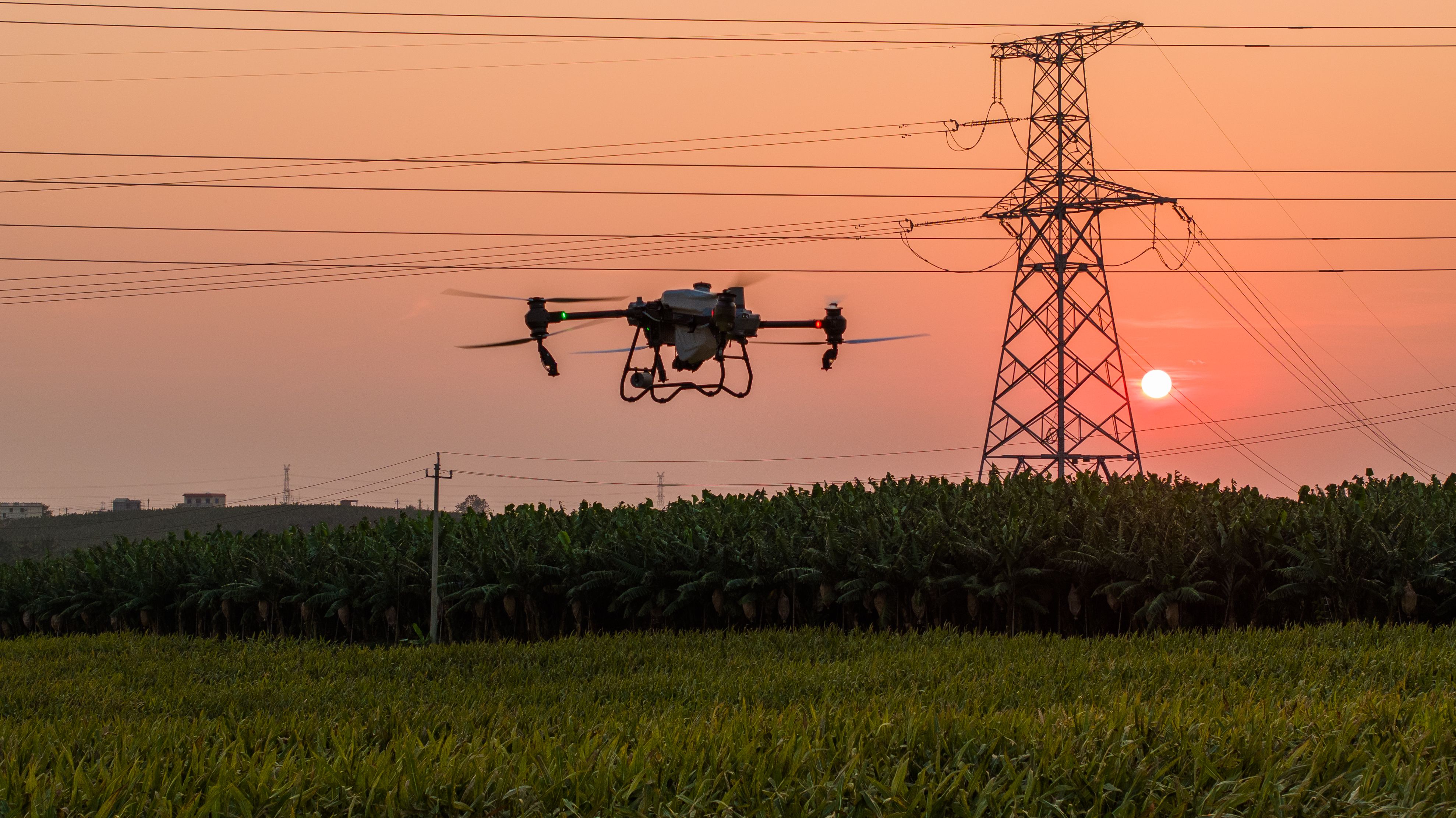
Drones flying cover crop seeding passes solve several of these problems at once. Because drones don't require wheels on the ground, they can seed fields that are still too wet or soft for tractors often the exact window right after harvest when cover crop timing matters most.
Flight paths are mapped in advance, which means seed goes down where it's actually needed rather than in a uniform blanket pass that wastes product on already-covered ground or skips awkward corners. This is the same underlying principle behind drone spreading more broadly targeted, mapped application instead of guesswork.
Because drones can also operate in early morning or calm evening conditions, seeding windows extend beyond what ground equipment or manned aircraft can typically manage, a scheduling advantage we've touched on in how drone spraying is revolutionizing agriculture in California.
Precision Where It Counts Most
Not every acre of a field needs the same seeding rate. Low spots that hold moisture longer, compacted tractor rows, or areas with thinner topsoil often benefit from a different seed density than the rest of the field. Pairing cover crop seeding with the kind of field data described in how drone mapping and field analytics improve crop management decisions allows growers to target these zones more intelligently instead of applying a flat rate across the entire field.
This same mapping-first approach is what makes drone mapping for farm field management useful well beyond spraying the same flight data that identifies crop stress zones during the growing season can just as easily inform where cover crop seed should be concentrated once that season ends.
Complex Terrain Is Where Drones Really Earn Their Keep
Southern California's growing regions aren't uniform. Hillside vineyards, terraced orchards, and irregular field boundaries make up a meaningful share of the region's agricultural land, and these are exactly the conditions where ground equipment struggles most.
For terrain like this, complex terrain drone applications allow cover crop seeding on slopes, between rows, and along borders that would otherwise require manual labor or get skipped entirely. Steep or uneven ground doesn't slow a drone down the way it slows a tractor, and there's no risk of equipment rollover or soil compaction on a hillside that's already vulnerable to erosion.
Timing The Real Cost Driver
Cover crop seeding is one of the more time-sensitive applications on a farm calendar. Seed too early and it competes with harvest operations. Seed too late and the crop doesn't establish enough root structure before winter rains arrive, defeating the purpose of erosion control altogether.
This is where the planning that happens before any flight matters most. As we outlined in what happens before a drone ever takes off, a huge amount of the value in a drone application comes from the mapping, weather analysis, and field scouting done ahead of time — not just the flight itself. For cover crop seeding, that prep work is what determines whether seed goes down in the two- or three-week window that actually gives the crop a chance to establish before conditions turn.
Cover Crops as Part of a Sustainability Strategy
Cover crop seeding rarely stands alone as a practice — it's usually one piece of a broader effort to reduce a farm's environmental footprint while protecting long-term productivity. That connects directly to the themes covered in the role of agricultural drones in sustainable farming, where reduced chemical drift, lower fuel use, and less soil disturbance all point toward the same goal: getting more out of every acre without degrading it in the process.
It also complements water management strategy. Fields with strong cover crop root systems tend to hold moisture more efficiently and reduce runoff during irrigation, a topic explored further in how agricultural drones improve water management and irrigation efficiency. Healthier soil structure and smarter water use tend to move together, not separately.
What This Looks Like on a Real Farm Calendar
For many Southern California operations, the sequence looks something like this:
- Post-harvest field mapping identifies compaction zones, low spots, and areas with thinner topsoil.
- Weather and soil moisture windows are tracked closely to identify the narrow period when the ground is workable but not too wet.
- Drone seeding passes apply cover crop seed at variable rates based on the mapped field data, targeting problem areas more heavily than already-healthy soil.
- Follow-up monitoring tracks germination and establishment, feeding into the same soil health data used earlier in the season.
This cycle turns what used to be a single, uniform seeding pass into a data-informed process that adjusts to what each part of the field actually needs.
Which Cover Crop Seeds Work Best With Drone Application
Not every seed type performs the same way when broadcast from the air. Growers considering drone seeding should think about seed size, weight, and germination requirements when selecting a cover crop mix:
- Cereal rye and oats broadcast well due to their size and weight, and they establish quickly even under less-than-ideal soil contact.
- Clover and vetch, smaller and lighter, benefit from being paired with light irrigation or expected rainfall shortly after seeding to improve soil contact.
- Mustard and brassica blends, often used for their weed-suppressing and biofumigant properties, are well suited to aerial application across larger acreage.
- Multi-species blends are increasingly common, since a mix of root depths and growth habits tends to deliver more soil benefit than a single species alone.
Because drone seeding allows for variable-rate application, growers aren't locked into a single blend or rate across the whole field. A heavier compaction zone might call for a deeper-rooted species at a higher rate, while healthier soil elsewhere gets a lighter, more cost-efficient pass.
Where Drone Seeding Fits Into a Broader Application Strategy
Drone seeding isn't meant to replace every method on every farm. Large, flat, uniform fields with easy equipment access may still see traditional seeding methods hold their own on cost. But for irregular terrain, tight timing windows, wet post-harvest conditions, or fields where precision matters more than raw volume, drone-based cover crop seeding closes a gap that ground equipment and manned aircraft often can't.
This mirrors the broader comparison covered in drone spraying vs. traditional spraying: which saves more the goal isn't choosing one method for every application, but knowing which tool fits which situation.
Working With Licensed, Experienced Operators
Cover crop seeding by drone still falls under the same regulatory framework as any other aerial application. Specialty Drone Solutions operates under FAA and agricultural licensing requirements, with trained pilots who understand not just how to fly a mapped route, but how to read field conditions, seed types, and timing windows specific to Southern California's growing regions from the Central Valley acreage around Kern County to the coastal growing areas further south.
Protect the Soil Between Seasons
The months between harvest and the next planting are easy to overlook, but they're some of the most consequential for a field's long-term productivity. Getting cover crop seed into the ground quickly, precisely, and at the right density can mean the difference between soil that rebuilds itself and soil that erodes a little more with every season.
If your operation is planning cover crop seeding for the coming off-season, contact Specialty Drone Solutions to talk through timing, terrain, and how drone seeding can fit into your farm's broader application strategy.