Cover crops are one of the most consistently high-return investments a grower can make. They build organic matter, suppress weeds, fix nitrogen, reduce erosion, and improve water infiltration in soils that Southern California's climate puts under significant stress every year. The case for cover crops in California agriculture has never been stronger both agronomically and from a regulatory standpoint, as water conservation and soil health requirements tighten across the state.
The problem has always been logistics. Getting cover crop seed into the ground at the right time, in the right amount, across fields that may be on slopes, still partially wet from irrigation, between standing orchard or vineyard rows, or freshly cleared after a late harvest this is where the intention to plant covers has historically collided with the practical limitations of ground equipment.
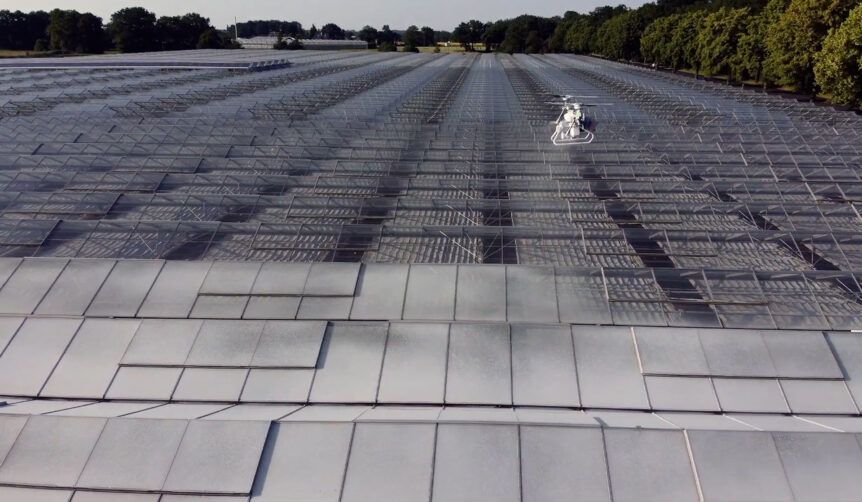
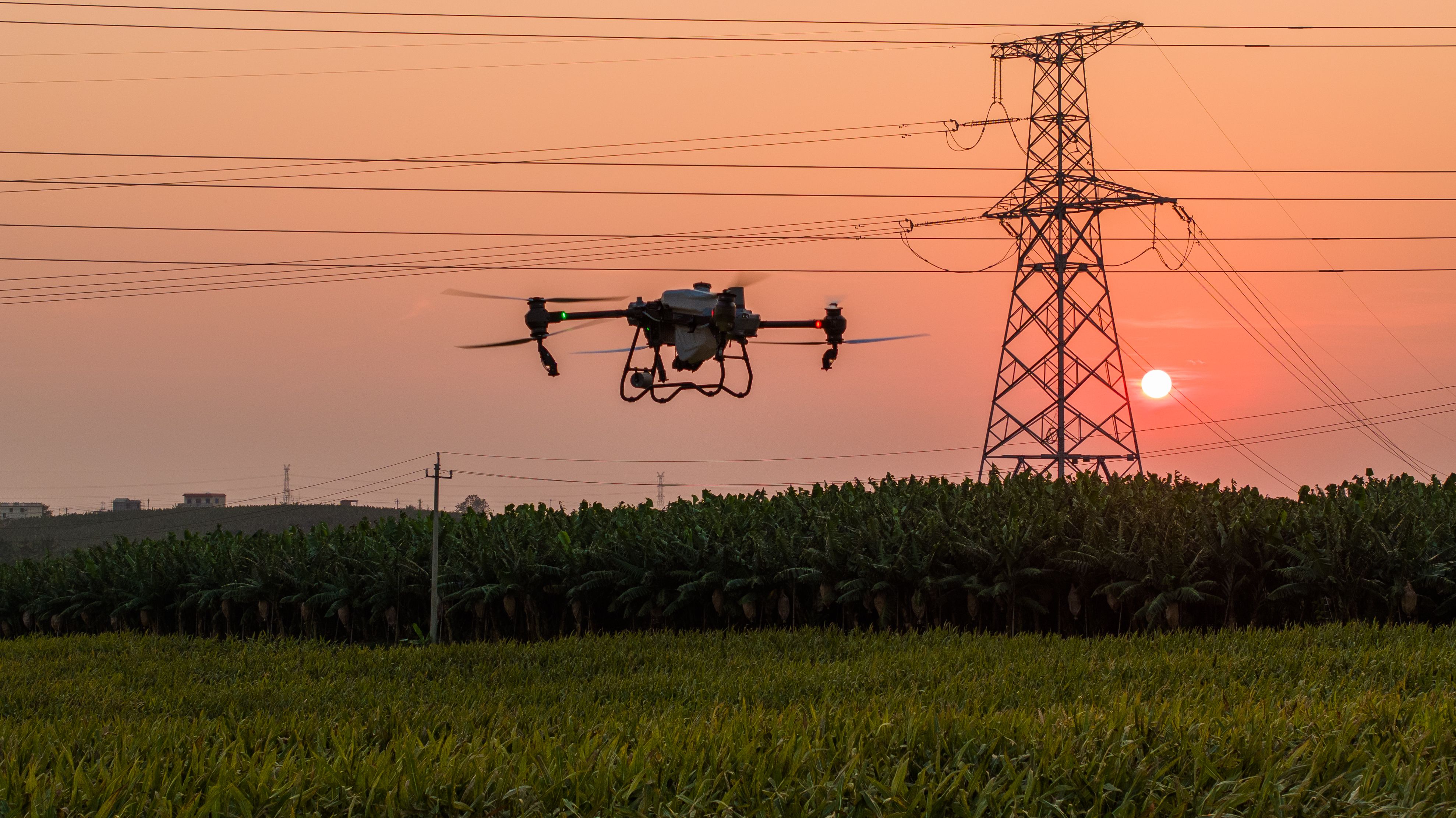
Drone cover crop seeding removes most of those limitations. A drone seeding system can fly within days of harvest, work across terrain that would bog down a ground spreader, seed between tree rows without wheel damage, and cover ground fast enough to catch the early-season rain window that makes or breaks cover crop establishment in Southern California.
This article covers how drone seeding works in practice, where it outperforms ground application, what species work best for different Southern California growing situations, and what growers need to know before the season begins.
Why the Timing Problem Matters More in Southern California
Cover crop establishment in Southern California is defined almost entirely by the rain window. Unlike the Midwest or Pacific Northwest, where fall moisture is generally reliable and planting windows are measured in weeks, Southern California growers are often working with a narrow and unpredictable window sometimes a single early rain event followed by a long dry stretch before the next. Seed that misses the first significant rain and sits in dry, warm soil faces germination failure, predation by birds and rodents, and decomposition long before the next moisture arrives.
This makes speed the primary variable in Southern California cover crop seeding. Not the speed of seeding itself, though that matters, but the interval between the decision to plant and the seed being in the ground. Ground seeders require soil conditions that support equipment fields that are too wet, too rough, or still bearing crop residue from a recent harvest may need days or weeks of preparation before a drill or broadcast spreader can operate. Drone seeding compresses that interval dramatically.
A Specialty Drone Solutions crew can stage, calibrate, and begin seeding within hours of a harvest clearance or a weather forecast that shows rain within 48 to 72 hours. No soil prep. No waiting for fields to firm up. No wheel tracks across a field that is already saturated from the last irrigation set. The seed goes in when the timing is agronomically optimal which is what determines whether the cover crop establishes or fails.
This connection between timing and field preparation is part of the broader pre-season planning discipline that applies across all drone agricultural services. The approach to what happens before any drone operation begins is covered in what happens before a drone ever takes off the same precision that governs a spray pass governs a seeding flight.
How Drone Cover Crop Seeding Actually Works
Drone seeding for cover crops uses a metered spreading system mounted beneath the aircraft a hopper and distribution mechanism that controls seed flow rate, spread width, and placement consistency. The drone flies at a calibrated height and speed across planned flight lines, releasing seed at a rate matched to the target seeding rate for the species being planted.
Flight planning for seeding is more complex than for flat-field spraying. Seed distribution physics are affected by rotor downwash, flight height, seed size and density, and wind. Heavier seeds cereal rye, oats, vetch behave differently than lighter seeds mustard, phacelia, crimson clover and require different calibration settings to achieve consistent distribution across the swath.
Before any seeding flight, the Specialty Drone Solutions team runs bench calibrations for the specific seed mix and conditions expected on the target field. Flight height and speed are set based on seed density and field topography. Test passes are evaluated for distribution pattern before full coverage begins.
During the flight, the drone maintains consistent height above the canopy or ground surface critical on sloped or uneven terrain where a fixed GPS altitude would result in variable effective distribution height. Real-time monitoring by the operator catches any flow anomalies before they affect coverage across a large area.
This attention to calibration and flight planning before any pass is executed reflects the same discipline described in precision drone spraying for modern farms the variables that govern a quality spray pass govern a quality seeding pass in equal measure.
Where Drone Seeding Outperforms Ground Application in California
Orchards and vineyards with established rows. This is the most compelling application for drone seeding in Southern California. Ground spreaders working between tree or vine rows cause wheel compaction in the root zone, create ruts in wet soil between rows, and struggle with tight spacing. A drone can seed the entire floor of an orchard or vineyard — including directly beneath the dripline in a single flight plan without any ground contact.
Establishment of covers under orchard canopies is significantly better when seed is placed before canopy shading reduces available light. Drone seeding allows placement early in the season, giving seeds the germination window before the canopy closes above them.
Sloped terrain and hillside blocks. Much of Southern California's premium agricultural land vineyard blocks, avocado and citrus orchards is on hillsides and terraced slopes where ground equipment is slow, risky, or impossible to use safely in wet conditions. Drone seeding is unaffected by slope angle. The aircraft maintains consistent coverage over terrain that would bench-work a tractor or require costly manual seeding labor.
The experience of operating in complex terrain is a core competency for Specialty Drone Solutions. The specific challenges of complex terrain drone applications in Southern California are something the company addresses across all service types seeding included.
Fields with late harvest or lingering residue. Cover crop seeding into standing or recently cut residue is a proven technique — interseeding into corn stubble is common in the Midwest but it requires aerial placement to work well. Seed broadcast into tall residue with ground equipment gets hung up in the biomass and fails to make soil contact. Drone-placed seed, dropped at a calibrated height with rotor downwash driving it toward the surface, achieves significantly better soil contact in high-residue conditions.
Wet or marginal field conditions. Southern California's fall transition can bring early rain events that wet fields before harvest is complete or before growers were planning to seed. A ground spreader waiting for fields to firm up misses the planting window. A drone working from the headland without entering the field captures that window intact.
Species Selection for Southern California Cover Crops
The right cover crop species for a Southern California field depends on the primary goal nitrogen fixation, weed suppression, erosion control, soil structure, or water infiltration along with the crop that follows and the expected rainfall pattern for the season. Drone seeding accommodates mixes as well as single-species plantings, and the calibration handles different seed sizes and densities within the same hopper with appropriate pre-mixing.
Cereal rye and oats are reliable workhorses for erosion control and biomass production on slopes and bare fields. Both are cold-tolerant, establish quickly, and produce significant root mass that improves soil structure. They are not nitrogen fixers but serve as excellent catch crops for residual nutrients, reducing winter leaching losses.
Legumes crimson clover, wooly pod vetch, and bell beans provide nitrogen fixation and are well-suited to Southern California's cooler, wetter months. They establish more slowly than cereals and benefit from inoculation before seeding. Drone seeding of inoculated legume seed requires attention to inoculant viability the seeding operation should occur promptly after inoculation and under conditions that don't expose inoculant to excess heat or UV.
Mustard and radish provide biofumigation benefits glucosinolate compounds released during incorporation suppress soilborne pathogens and nematodes and are increasingly used in strawberry, vegetable, and tree crop rotations in Southern California as an alternative to chemical fumigation. Both establish quickly and produce significant biomass.
Phacelia is an excellent California-native option that establishes fast, attracts beneficials, and suppresses weeds through canopy closure. It is particularly useful in areas where the cover crop needs to provide pollinator habitat alongside soil benefits.
Mixes that combine a cereal, a legume, and a broadleaf typically deliver the most balanced benefit set — root architecture diversity, combined nitrogen and biomass production, and weed suppression through canopy complexity. Specialty Drone Solutions can discuss species and rate recommendations for specific fields, soil types, and crop rotations before the season begins.
The Water and Soil Health Connection
Cover crops in Southern California do something that is increasingly financially and regulatorily significant: they improve water infiltration and retention in soils that are subjected to high evapotranspiration, tillage, and bare-ground periods.
A field with an established cover crop absorbs rainfall faster, loses less water to runoff, and builds the organic matter that allows soil to hold water between precipitation events. In a state where water allocation and cost are permanent concerns for farm operators, the ability of cover crops to reduce irrigation demand in subsequent cash crops has real balance-sheet implications.
The soil health dimension of drone-applied inputs both seeding and the agronomic context around soil condition monitoring is covered in how drone technology enhances soil health monitoring on large farms. The cover crop is the agronomic tool; the drone is the delivery system that makes it practical to deploy at scale and at the right time.
Regulatory and Sustainability Context in California
California's Healthy Soils Program and various NRCS EQIP practice standards provide cost-share and incentive opportunities for growers who implement cover cropping as part of a documented soil health plan. The specific cover crop species, seeding rates, and timing may need to meet program requirements to qualify — and the job records generated by drone seeding operations support that documentation.
Drone seeding also contributes to the sustainability accounting that increasingly matters to buyers, retailers, and consumers of California agricultural products. Supply chain sustainability requirements are expanding across specialty crops, and growers who can document soil health practices including cover cropping are better positioned in premium markets and retailer programs that track environmental metrics.
The broader role of drone technology in sustainable farming practices, including its contribution to reduced chemical inputs, improved soil health, and lower overall environmental footprint, is explored in the role of agricultural drones in sustainable farming.
Planning Your Cover Crop Seeding Season
The growers who get the most from drone cover crop seeding are the ones who plan before harvest is complete. Knowing which fields will be seeded, with which species mix and at what rate, before the harvest window begins allows the seeding crew to stage efficiently and execute within the narrow timing window that Southern California's fall rain pattern demands.
Key decisions to work through before the season:
Target fields and their characteristics. Slope, existing residue, proximity to water, crop that follows, and any program requirements that govern species or rates.
Species mix and rates. Based on primary goals nitrogen, erosion, biofumigation, pollinator habitat, or combined benefit. Inoculated legumes need to be ordered and prepared in advance.
Timing trigger. Define the rainfall forecast or field condition that initiates the seeding call. Having this decision made before the window opens avoids delays when conditions are right.
Post-seeding management. Some cover crop species benefit from light incorporation after aerial seeding in dry conditions. Others establish well from surface placement into adequate moisture. The management plan after seeding affects species choice.
Specialty Drone Solutions works with Southern California growers across Los Angeles, Ventura, Santa Barbara, San Luis Obispo, Kern, and adjacent counties to plan and execute cover crop seeding programs that fit each operation's agronomic goals, terrain, and timing requirements.
For growers interested in how drone services fit into a broader precision agriculture strategy from early-season soil assessment through in-season spray programs and post-season seeding the overview of precision drone agriculture for California farms provides the integrated context.Contact Specialty Drone Solutions to discuss cover crop seeding for your operation and get on the schedule before the season window opens.