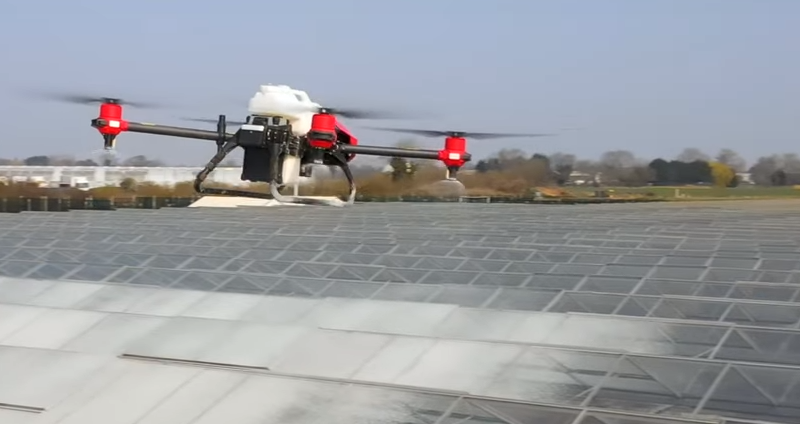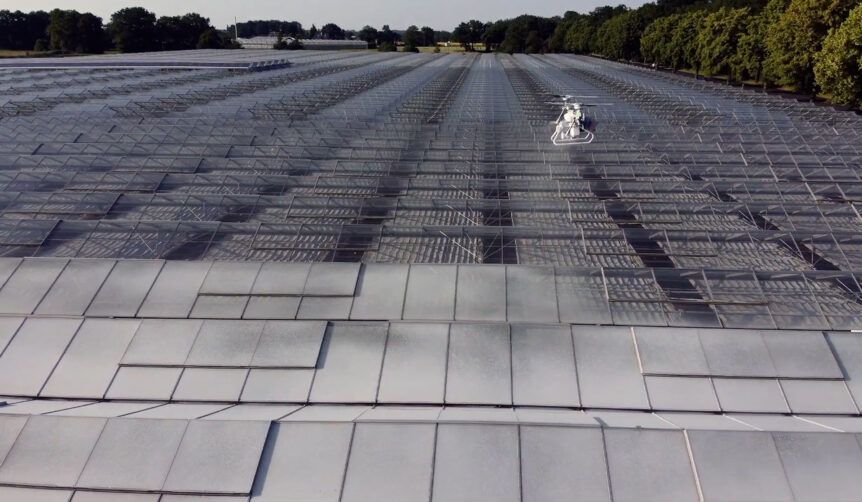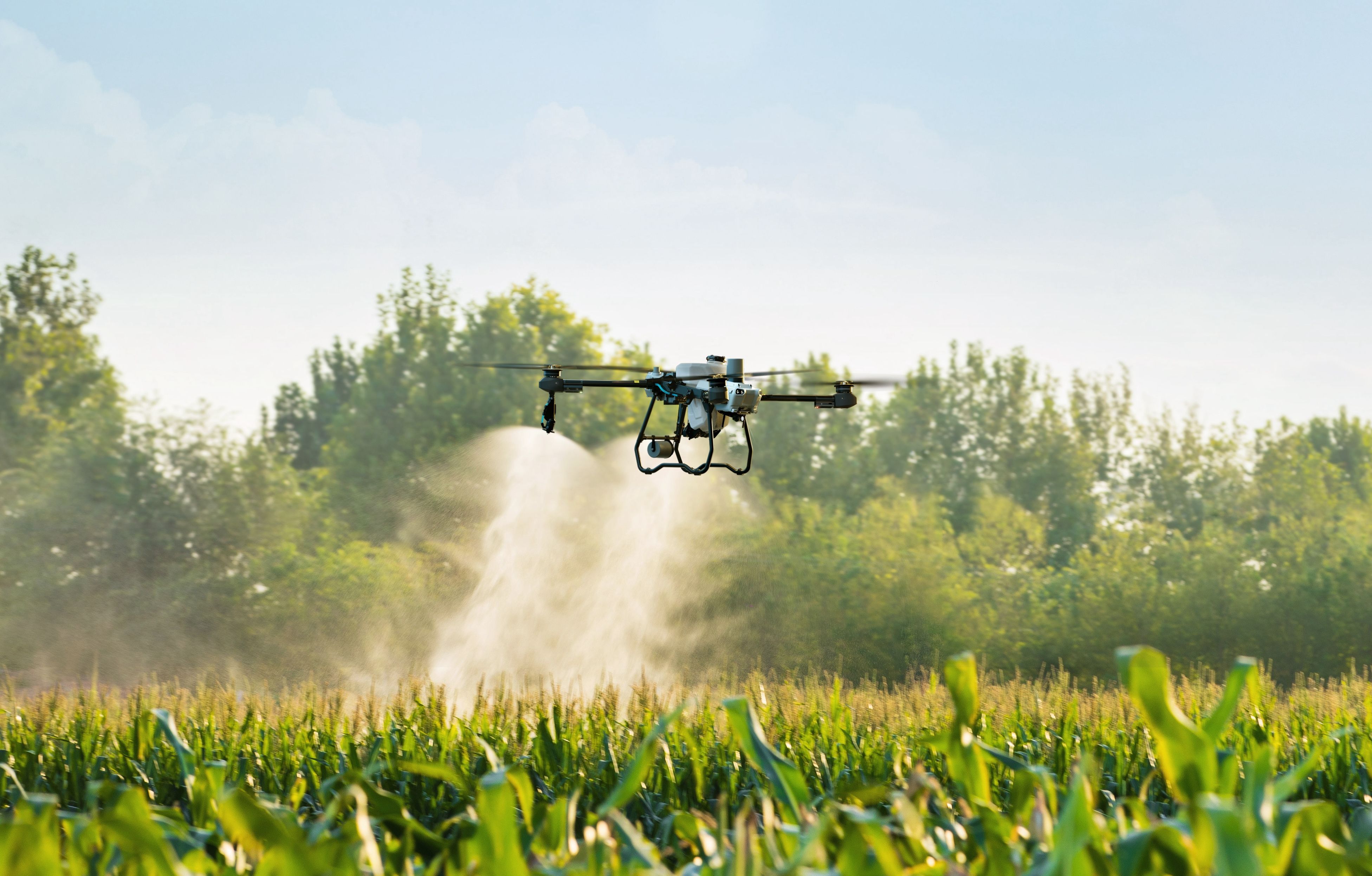
Southern California farming is unlike farming anywhere else in the country. A single county can contain steep hillside avocado orchards, flat irrigated row crop fields, dense citrus groves, coastal strawberry operations, and vineyard blocks on slopes that ground equipment cannot safely work. The diversity of terrain, crop types, and production systems across Los Angeles, Ventura, San Diego, Riverside, Orange, San Bernardino, Kern, Santa Barbara, San Luis Obispo, and Imperial counties creates an agricultural landscape where one-size-fits-all application methods consistently fall short.
Drone spraying services in Southern California exist specifically to solve this. A drone reaches fields that manned aircraft cannot safely fly low enough to cover effectively. It works on slopes where ground rigs create soil compaction and erosion risk. It applies product with the precision that high-value specialty crops require, at the speed that large acreage operations demand. And it does all of this without the drift problems, the labor overhead, or the soil damage that conventional application creates.
Specialty Drone Solutions provides licensed agricultural drone spraying services across all of Southern California. This article covers the counties we serve, the crops we work with, and exactly what the process looks like from first contact through completed application.
Where We Operate Across Southern California
Los Angeles County
Los Angeles County has more agricultural land than most people realize, concentrated in the San Fernando Valley, the Antelope Valley, and the areas south of the Santa Monica Mountains. Avocado orchards, citrus groves, nursery operations, and cut flower production all operate within the county, often in terrain that makes traditional application equipment difficult to deploy efficiently. Our Los Angeles County drone spraying service covers the full range of agricultural operations across the county, from flat valley floor production to hillside orchard blocks.
Ventura County
Ventura County is one of California's most productive agricultural counties by value, anchored by strawberries, lemons, avocados, and a range of vegetables and cut flowers. The terrain transitions rapidly from coastal plains to foothill slopes, and many of the county's most productive operations are on ground that challenges conventional equipment. Drone spraying in Ventura County serves both the flat coastal operations where speed and precision matter and the hillside orchards where terrain access makes drones the practical choice.
San Diego County
San Diego County avocado orchards, citrus groves, and specialty crop operations are distributed across terrain that makes aerial application from manned aircraft impractical for many blocks. The steep slopes, the proximity to residential areas, and the high value of the crops all make drone application the right fit for San Diego County. Our San Diego drone spraying service covers avocados, citrus, nursery operations, and the diverse specialty crop production that defines San Diego County agriculture.
Riverside and San Bernardino Counties
The Inland Empire agricultural land, including the citrus groves of the Riverside area, the desert agriculture of the Coachella Valley, and the date palm and specialty crop operations of the lower desert, creates a varied service area. Drone spraying in the desert regions addresses the specific challenges of high-temperature operation and the wide field spacing of desert crop systems.
Orange County
Orange County's remaining agricultural land is concentrated in specialty nursery operations, strawberry production, and small-scale specialty crops. These operations benefit from the precision and reduced footprint of drone application where traditional equipment use would be impractical given the scale and location of production.
Kern County
Kern County is one of California's most agriculturally productive counties, with significant operations in almonds, pistachios, citrus, vegetables, and cotton. The scale of Kern County agriculture, combined with the flat to rolling terrain that characterizes much of the county, makes drone spraying practical for both large-acreage broadcast applications and targeted specialty treatments. Our Kern County service covers the full range of production systems from the valley floor operations to the foothill orchards above Bakersfield.
Santa Barbara and San Luis Obispo Counties
The wine grape production of the Santa Ynez Valley, Santa Maria AVA, and the Edna Valley and Arroyo Grande areas of San Luis Obispo County represents some of the most valuable agricultural land in Southern California. Vineyard drone spraying in these appellations requires precision application in blocks with irregular dimensions, steep grades, and high-value crops where coverage quality directly affects the harvest outcome. Our coverage in Santa Barbara and San Luis Obispo counties serves wine grape, avocado, and the range of specialty crops that define these coastal agricultural regions.
Imperial County
Imperial County's desert agriculture, including vegetable production, alfalfa, and cotton across the irrigated desert floor, creates an application environment defined by scale, heat, and the logistics of farming in an extreme climate. Drone spraying in Imperial County addresses the specific operational challenges of desert production where timing and efficiency are critical.
The Crops We Spray Across Southern California
Avocados
Avocado orchards are among the most challenging crops for conventional application methods in Southern California. The steep hillside terrain where most commercial avocado production occurs, the dense canopy that conventional aircraft struggles to penetrate effectively, and the proximity of many orchards to residential areas all point toward drone application as the right fit. Drone spraying in avocado orchards achieves canopy penetration that aircraft cannot match and operates safely on slopes that ground equipment cannot access without erosion and compaction risk.
Citrus
Southern California's citrus operations span flat valley floor production and foothill groves across multiple counties. Drone spraying for citrus covers the full range of inputs including copper fungicides for disease management, insecticides for Asian citrus psyllid and other pest pressure, and foliar nutrition applications. The ability to apply precisely on flat ground and on hillside blocks without changing equipment or logistics makes drone spraying efficient across the varied terrain where citrus is grown in the region.
Wine Grapes and Table Grapes
Vineyard drone spraying in Southern California requires precise canopy management, careful attention to buffer zones between blocks, and the flexibility to work in irregular vineyard configurations on sloped terrain. Specialty Drone Solutions works with wine grape and table grape producers across Santa Barbara, San Luis Obispo, Riverside, and Temecula area vineyards with application programs matched to the specific disease pressure, canopy architecture, and spray timing that each operation requires.
Strawberries
Coastal strawberry production in Ventura and San Diego counties involves high-density planting on plastic mulch where ground equipment compaction is a real concern and where application timing is driven by weather windows that close quickly. Drone spraying in strawberry fields addresses fungicide programs for Botrytis and powdery mildew, insecticide applications for thrips and other pest pressure, and foliar nutrition without the disruption that ground equipment creates in a productive field.
Almonds and Tree Nuts
Kern County and the transition areas into the Central Valley include almond and pistachio operations where drone spraying covers bloom-time fungicide applications, insecticide timing, and the hull split applications that require precise timing in the summer heat. The speed of drone application across large almond blocks, combined with the ability to operate at the low altitudes that maximize canopy penetration, makes drone spraying competitive with manned aircraft for nut crop applications.
Row Crops and Vegetables
Row crop and vegetable production across Southern California counties benefits from drone spraying where precision, speed, and the ability to work in wet field conditions matter. Helicopter and fixed-wing aircraft applications create drift problems in vegetable fields adjacent to other crops or sensitive areas. Drone application reduces that drift through lower flight altitude and controlled droplet delivery.
Specialty and Nursery Crops
Southern California's nursery industry and the diversity of specialty crops grown across the region create application needs that do not fit neatly into standard crop categories. Custom drone application programs for specialty nursery crops, cut flowers, and niche production systems are part of what Specialty Drone Solutions' custom application service provides. The custom application approach that handles non-standard crop and application requirements is covered in the agricultural drone services overview at agricultural drone services and precision aerial solutions.
What the Drone Spraying Process Actually Looks Like
Growers who have not used drone spraying services before often want to understand exactly what happens from the point they contact a provider through the completion of the application. The process is more straightforward than most people expect.
Step One: Consultation and Field Assessment
The process begins with a conversation about the crop, the target problem or input being applied, the field size and terrain, and the timing the application needs to hit. For new growers evaluating drone spraying for the first time, this conversation also covers what drone application is appropriate for, what it is not the best fit for, and how the pricing structure works.
This initial assessment is the foundation that every successful application is built on. Everything that happens before the drone ever lifts off determines whether the application achieves the agronomic objective. The detail that goes into this pre-flight planning is covered in the article on what happens before a drone ever takes off.
Step Two: Flight Planning and Regulatory Compliance
Every field requires a defined flight plan before application begins. The flight plan establishes the treatment boundary, the flight lines across the field, the altitude and speed settings that achieve the target application rate, and any buffer zones required by the product label or by proximity to sensitive areas.
Regulatory compliance for every Specialty Drone Solutions application includes maintaining FAA compliance for drone operations, complying with California DPR requirements for licensed pest control aircraft operations, and ensuring that all products applied are used in accordance with their label registrations. Agricultural drone spraying in California operates within a specific regulatory framework, and understanding that framework is part of what Specialty Drone Solutions brings to every application. The regulatory compliance requirements that govern agricultural drone spraying in California are covered in detail in the article on regulatory compliance for agricultural drone spraying in California.
Step Three: Calibration and Equipment Check
Before any application begins, the drone and spray system are calibrated to the specific product, application rate, and field conditions. Flow rate, nozzle selection, tank mixing, and the relationship between flight speed and application rate are all set to achieve the target coverage for the specific application. This calibration step is what ensures that the label rate is delivered accurately rather than approximately.
Step Four: Application
The drone executes the flight plan autonomously along the defined flight lines, applying product at the calibrated rate within the defined treatment boundary. The operator monitors the application in real time, watching for any system anomalies and confirming that coverage is proceeding as planned. Battery swaps and tank refills are managed to maintain continuous application progress without gaps in coverage.
For large fields, multiple drone units can be deployed simultaneously to increase the effective application speed. Specialty Drone Solutions' capacity to treat up to 150 acres per hour reflects the multi-unit deployment that large Southern California operations sometimes require.
Step Five: Records and Documentation
Every application is documented with GPS-tracked flight data, application rate records, product batch information, and timing. These records are provided to the grower for their pesticide application records and for certification compliance where applicable. For growers operating under organic certification, documentation confirms that only approved products were applied and that application boundaries were maintained.
How Drone Spraying Compares to the Alternatives in Southern California
Southern California growers choosing between drone spraying, ground application, and manned aircraft application weigh different factors depending on their specific situation.
Ground application is appropriate where terrain allows equipment access without soil damage, where the crop can tolerate the physical impact of equipment passing through, and where the field size and application volume do not create efficiency problems for tractor-mounted equipment. Ground application is not appropriate for steep slopes, for fields where equipment access would cause compaction or physical crop damage, or for the growing number of operations where reducing ground disturbance is an operational priority.
Manned aircraft application covers large acreage quickly but operates at altitudes that limit canopy penetration compared to drone application at low altitude. Aircraft application also creates greater drift potential and has minimum area and safety requirements that make small fields and complex terrain applications impractical. The detailed comparison between drone spraying and traditional spraying methods, including manned aircraft, is covered in the article on drone spraying versus traditional spraying and which saves more.
Drone spraying fills the space between ground and air where both alternatives have limitations. It operates at the altitude that maximizes canopy penetration. It handles terrain that ground equipment cannot access. It works at the field sizes and configurations that manned aircraft minimum area thresholds exclude. And it does all of this with the GPS precision that defines every flight line and treatment boundary.
The sustainability dimension of drone spraying relative to conventional application methods is also worth understanding for Southern California growers who are managing production in a regulatory and market environment where reduced-input production has real value. The article on the role of agricultural drones in sustainable farming covers how drone application contributes to sustainable production outcomes.
Getting Started With Drone Spraying in Southern California
Specialty Drone Solutions serves all ten Southern California counties from our base in Calabasas. Free consultations are available for growers who want to understand whether drone spraying is appropriate for their operation, what a service program for their specific crops and acreage would look like, and how pricing compares to their current application costs.
For growers who want to understand more about how drone technology is changing what is possible in precision agriculture across California before requesting a consultation, the article on how drone technology is shaping precision agriculture provides the broader context for what drone services represent in modern farm management.