Conventional ground equipment has always been a compromise in vineyards, avocado orchards, and citrus groves. The equipment is large relative to the row spacing and canopy geometry it is trying to serve. The spray is applied from the sides rather than from above, which means canopy penetration depends on wind drift and pressure to move product into the interior of the plant structure where the target pest or pathogen actually lives. And the equipment that is large enough to carry adequate tank volume and pump capacity for efficient coverage is also the equipment most likely to create soil compaction, damage surface roots, and disrupt the mycorrhizal networks that high-value perennial crops depend on.
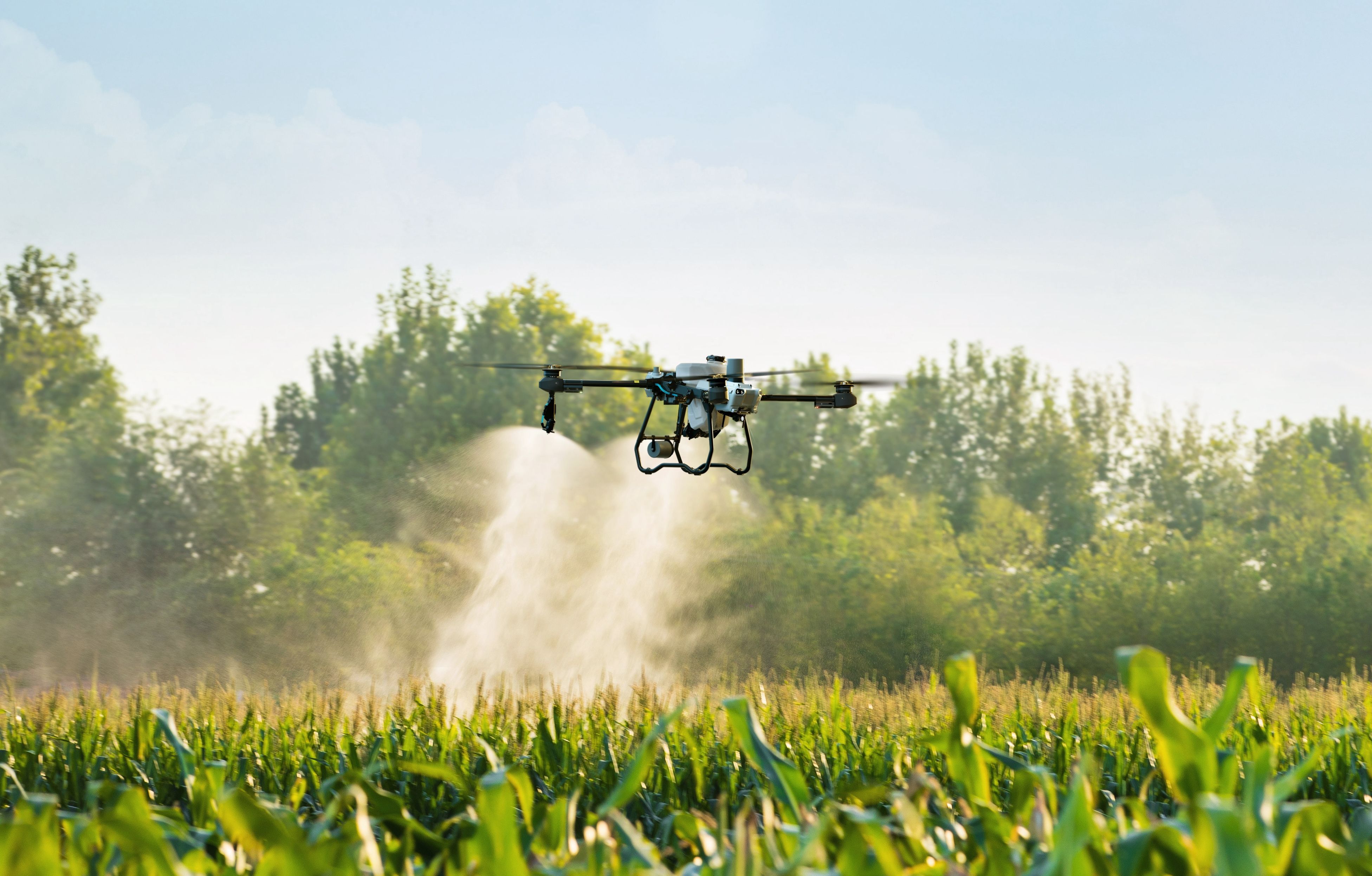
Drone spraying addresses these limitations in ways that matter specifically for the high-value perennial crops that define the agricultural landscape of Ventura, Santa Barbara, San Luis Obispo, and Riverside counties in Southern California. The application comes from above the canopy, which is where canopy penetration physics most favor complete coverage of the interior leaf surfaces and the underside of leaves where many mite, aphid, and fungal targets are found. The aircraft's downwash accelerates air movement through the canopy during application, which further improves interior penetration. And there is no ground equipment contact with the soil or the root zone.
Why Vineyards Benefit From Drone Spraying More Than Most Crops
Vineyard canopy structure creates specific application challenges that make drone spraying particularly well suited to this crop type compared to the broad-acre row crops where conventional ground equipment is adequate.
Canopy Penetration in Trellised Vines
Wine grapes on a trellis system create a dense, continuous canopy that is the target environment for the powdery mildew, Botrytis, grape leafhopper, and mite populations that Southern California vineyard managers spray against most frequently. Getting fungicide or insecticide to the interior of that canopy, to the leaf undersides and the cluster interiors where powdery mildew and Botrytis infections establish, requires either very high spray volumes applied from the sides with airblast equipment or a delivery approach that penetrates the canopy from above.
Drone spraying delivers product from directly above the canopy at a calibrated rotor speed that creates the downwash penetration that moves spray into the canopy interior. The rotary wing downwash at the specific altitude the drone maintains above the vine row creates a vortex that opens the canopy from above and carries spray droplets into the leaf interior that side-delivery airblast cannot reach with the same efficiency.
This canopy penetration advantage translates directly to spray efficacy for the fungal and insect targets that live in the interior of the grape canopy. Programs that rely on interior canopy coverage to be effective benefit from the above-canopy delivery that drone application provides.
Row Spacing and Terrain Navigation
Southern California's premium wine country in the Santa Ynez Valley, the Temecula Valley, and the coastal Ventura County appellations includes significant amounts of hillside and steep terrain vineyard that ground equipment cannot navigate safely or efficiently. Airblast sprayers that work well on flat ground become handling problems on hillside vineyards where the slope creates stability issues and the equipment's weight and turning radius create application inefficiency on the switchback passes that hillside row arrangement requires.
Drones have no terrain limitation. The flight path is programmed above the rows at a consistent height above the canopy regardless of the ground slope below. A hillside vineyard that takes a ground equipment operator significantly longer per acre than a flat vineyard takes a drone the same time per acre as any equivalent flat vineyard. The economics of the hillside application, which have always made hillside vineyard management more expensive than flat ground production, improve when the drone eliminates the terrain penalty from the spray application cost.
Minimal Soil Disturbance
Vineyard soils that are managed to develop the complexity of biological activity that premium wine production values are soils that benefit from minimal mechanical disturbance. Every pass of ground equipment compacts soil in the wheel track, disrupts surface roots that the vine uses for water and nutrient uptake in the upper soil profile, and creates the tillage effect that breaks up aggregate structure that takes seasons to rebuild.
A drone application involves zero ground contact with the vineyard soil between the vine row and the end of row turning areas. Repeated drone applications across a season accumulate zero additional compaction relative to a single ground application. For premium vineyards where soil health is a stated production goal and where growers actively manage to reduce ground equipment passes, drone spraying for pest and disease management is directly aligned with those soil health objectives.
Avocado Orchards Where Drone Spraying Solves the Access Problem
Southern California's avocado production, centered in the Ventura County hillsides from Camarillo through Oxnard and into the Santa Monica Mountains foothills, and extending through the inland valleys of San Diego County, is among the most topographically challenging agricultural production in the state. Avocado orchards planted on canyon slopes, ridgeline terraces, and hillside terrain that maximizes air drainage for frost protection are exactly the terrain where ground equipment application is slowest, most difficult, and most limited in coverage quality.
Canopy Coverage in Mature Avocado Trees
Mature avocado trees develop large, dense canopies that create significant coverage challenges for ground-based application equipment. Aerial application from conventional fixed-wing or helicopter platforms has been used for avocado disease and pest management, but the precision and the ability to fly at the low altitude that optimizes coverage without drift is limited for those platform types.
Drone spraying at a calibrated height above the avocado canopy delivers product at the proximity and with the rotor downwash that provides canopy penetration and reduces off-target drift simultaneously. The Phytophthora root rot management programs that include foliar phosphonate applications, the thrips management programs that require adequate coverage of the new flush growth, and the mite management programs that target populations on the underside of older leaves all benefit from the above-canopy delivery that drone application provides.
Water Use Efficiency in Drone Application
Southern California's persistent water limitations make the water use efficiency of spray applications a relevant operational consideration for avocado growers who are already managing irrigation water carefully. Drone application uses significantly less water per acre than conventional dilute ground application for the same active ingredient dose. The concentrated formulation that drone application uses reduces the volume of water required to carry the product, which is a meaningful efficiency advantage in a production region where water is both limited and expensive.
Citrus Groves Drone Spraying for Disease and Pest Management
Southern California's citrus production in the Inland Empire, Riverside County, and the San Bernardino County foothill areas faces significant disease and pest pressure that requires consistent, effective spray programs to manage. Citrus greening disease (HLB) spread by the Asian citrus psyllid, brown rot from Phytophthora species in wet years, and the mite and scale populations that affect fruit quality and tree health all require foliar applications that reach the target pest or pathogen on the tree.
Tree Architecture and Coverage Requirements
Citrus trees present a similar coverage challenge to avocado in that the mature tree's canopy is large enough that conventional airblast application from the row middles does not achieve uniform coverage of all leaf surfaces throughout the canopy depth. The interior of a mature Valencia or navel orange tree that has not been hedged to maintain spray access is a dense canopy that resists side-delivered spray penetration.
Drone application at the height calibrated for the specific tree size and row spacing delivers product to the top of the canopy and creates the downwash penetration that reaches interior leaves at depths that side delivery cannot achieve at practical spray volumes.
Spray Program Timing and Labor
Citrus spray programs that require specific application timing relative to pest emergence, weather windows, or regulatory restrictions benefit from the deployment flexibility that drone application provides. A drone program can be mobilized and the spray completed within a shorter mobilization window than ground equipment, which is an operational advantage when the application timing is driven by a pest threshold reached on a specific day rather than by equipment availability.
The pre-flight planning process that ensures drone applications happen in the optimal conditions for coverage and efficacy, and how Specialty Drone Solutions approaches mission planning for specialty crop applications, is covered in the article on what happens before a drone ever takes off and why the preparation determines the outcome.
Specialty Row Crops Drone Advantages for Strawberries, Leafy Greens, and Vegetables
Beyond tree crops and vineyards, the specialty vegetable and berry production that Ventura County and the coastal Santa Barbara and San Luis Obispo growing areas concentrate has its own drone spraying advantages.
Strawberry Applications
Strawberry production in the Oxnard Plain and Ventura County coastal areas requires frequent fungicide applications for Botrytis management, mite applications during the season, and in some programs, insecticide applications for lygus bug and other insect targets. Conventional spray equipment on strawberries creates a wheel track problem when the beds are at the stage where the canopy covers the bed surface and the berry quality and timing requirements make any delay in application costly.
Drone application over mature strawberry canopy delivers the above-canopy coverage that reaches the berry cluster environment where Botrytis establishes, and eliminates wheel track problems entirely. The application timing flexibility that drone deployment provides also allows applications to be made at the optimal weather window rather than being constrained by equipment scheduling.
Leafy Greens and Vegetable Crops
Fresh market vegetable production has strict pesticide residue requirements that make precise, targeted application important for meeting pre-harvest interval requirements while maintaining pest and disease control. Drone application's ability to deliver calibrated product amounts to specific field zones, including spot treatment applications that address pest hotspots without treating the entire field, is directly aligned with the precision requirements of fresh market production.
The spot treatment capability that drone application provides for targeted pest management, avoiding the full-field applications that conventional equipment requires, is covered in the article on drone spot treatments for California farms and how targeted applications reduce chemical use.
Regulatory Compliance for Specialty Crop Drone Applications in California
California's pesticide regulation through the California Department of Pesticide Regulation (CDPR) and county agricultural commissioners applies to drone application in the same way it applies to all commercial pesticide applications. Products applied by drone must carry a label that specifically permits aerial application, and the application must be made by or under the supervision of a licensed California Qualified Applicator.
Specialty Drone Solutions operates under the appropriate California licenses and works with growers to ensure that the products used in drone applications are labeled for aerial use on the specific crop being treated. This compliance framework protects the grower from the regulatory exposure that unlicensed or improperly labeled applications create.
The regulatory compliance framework for agricultural drone spraying in California and what growers need to understand about licensing, label requirements, and county permits is covered in the article on regulatory compliance for agricultural drone spraying in California.
Getting Started With Drone Spraying for Your Southern California Specialty Crop Operation
Specialty Drone Solutions serves Ventura, Los Angeles, Orange, San Bernardino, Riverside, San Diego, Kern, Santa Barbara, San Luis Obispo, and Imperial counties with drone spraying services for vineyards, tree crops, specialty row crops, and the full range of agricultural applications.
The service process starts with a site visit and consultation that establishes the canopy characteristics of the specific crop, the application requirements of the pest or disease program being implemented, and the equipment configuration and product formulation that will produce the coverage the program requires.